



 48 / 88

Truck and Track
Spring 2019
www.truckandtrack.com48
LOADING BAYS
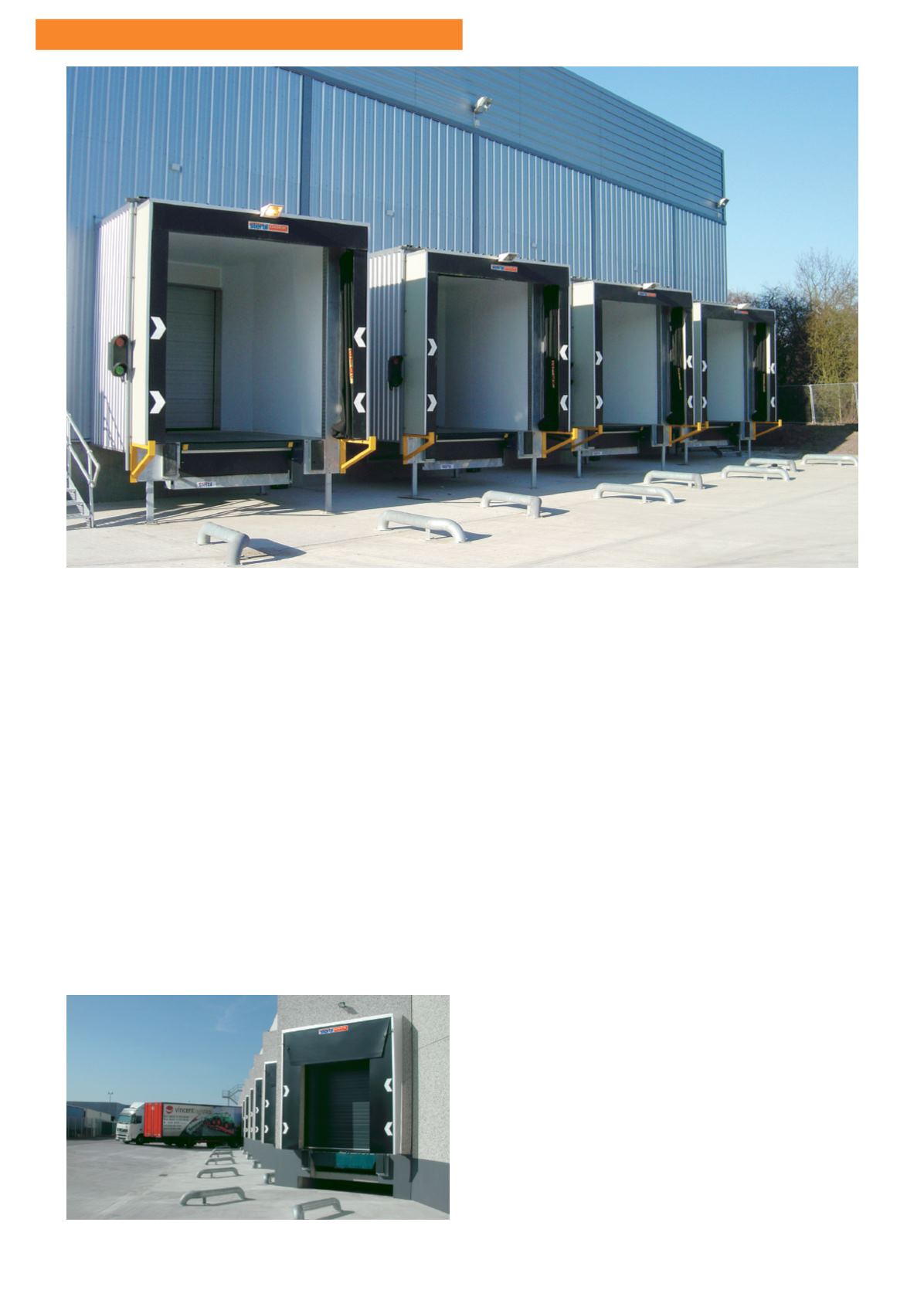
Stertil Dock Products – one of Europe’s leading designers,
manufacturers and installers of loading bay equipment and
industrial doors - sets out a few simple steps to avoid the many
pitfalls that are frequently encountered in specifying a loading
bay.
STEP 1 - Talk to an expert
A good technical salesmen will ask a lot of questions about your
application to ensure that they only sell you the right products. They
are seeing distribution companies with problems and applications
just like yours every day of the week and will have the benefit of
experience.
STEP 2 - Have you seen the product?
Make sure that you ask the technical salesman to show you the
products before you buy. It’s always a good idea to visit a site and
talk with a satisfied customer. Let the technical salesman set up a
couple of site visits and also visit their head office if it’s possible.
STEP 3 - Talk to an established supplier.
Most of the really good suppliers are part of a European Group
and are manufacturing several thousand dock levellers and
dock shelters a year. They have economies of scale whilst turning
out good quality products complying with the latest European
regulations regarding safety and performance.
STEP 4 - Ensure that the supplier is qualified to install the product
Because of the seasonal and cyclical nature of the retail market,
most suppliers use sub-contract installers. Nothing wrong with
that, providing that they are fully trained in the installation of
your supplier’s products. An ISO 9000 quality programme usually
provides a system of vendor assessment that ensures that all
suppliers are inducted, trained and conversant with the company’s
products, systems and Health and Safety requirements.
STEP 5 - In the afterlife
Once your loading bay is operational, it should be regularly
maintained to ensure that optimum life and performance is
attained. Can your supplier offer routine maintenance contracts
with his own service engineers? Can he offer 24-hour callouts?
Are all of his engineers trained on all of the products? Do they have
access to electronicmanuals for some of the older products or those
that are less frequently serviced?
What can go wrong?
There aremany things that can gowrong - here are a few examples:
Too small a door or too low a door.
Too steep a slope on the approach to the dock.
Wrong size of dock leveller.
Wrong capacity of dock leveller.
Door size
The correct door will allow for easy access of transport equipment
and product into the vehicle during the loading and unloading
operation, and will reduce building damage!
Most HGV’s are a minimum of 2400mm wide, with refrigerated
trailers up to 2600mm wide. With barn doors swung back, a fridge
trailer can be as much as 2900mm wide. Trailer wheel guides
(a false economy not to fit them) are set at 2600mm wide to the
inside of the tube. Even so, drivers cannot be expected to be exactly
on the spot every time. Don’t forget the driver is 16 or 17metres
away and looking in his mirror! So give the trailer plenty of room
inside the doorway.
Smaller delivery vans (7.5T and 12T especially) can be fitted
How do I know I’m buying the right
loading bay?